One of the many perks of having a plot of fresh produce just outside your backdoor is how easy it is to cook simple, delicious meals. We both enjoy cooking, in pretty much all its forms. There are nights that we want to make something from a fancy recipe, and spend hours in the kitchen rolling roulades, whipping up demi glaces, and scads of other french-sounding culinary tasks. If we're in the right mood, that can make for a whole evening's entertainment. But other nights we just need a simple way to use some of our fresh garden produce.
This has particularly been the case recently, as our planned canning tomatoes have come in bit by bit rather than in one giant harvest. It seems we never have enough at one time to can up, yet if we try to wait for more to ripen, the first few will start to go bad. So why not make up a batch of garden-fresh tomato sauce, not to save, but to eat right away? A tasty sauce, inspired by this find on the internet - roasted tomato sauce from the "Sweet Pea Chef" blog.
We started with two pounds of our sauce tomatoes, romas and a variety called agro. Both of these tend to be meatier than a regular slicing tomato, so you don't end up with a bunch of watery goosh when you cook them. We opted to use some of our older ones as well, just cutting off any parts that looked or felt a bit past their prime. These we cut in half, and placed into sprayed baking dishes, along with a roughly chopped onion, several cloves of smashed garlic, and a couple cut-up carrots (they were small ones). As an added bonus, every single one of those ingredients was grown by us in our own backyard!
We drizzled the pans with a hearty amount of olive oil, then salted, peppered, and threw them into a 350 degree oven for about an hour and fifteen minutes. Hey, we said it was simple; we never said anything about quick! After an hour, the house began to fill with the aromas of roasting tomatoes, and by time we pulled them out, some of the veggies were just starting to blacken a bit and caramelize, like this.
Now you have to resist eating the lovely roasted tomatoes on their own - remember, we want a sauce here. And this is another time where an odd little kitchen tool really comes in handy. Sure, you could blend up the vegetables and probably get a good, smooth sauce. But if you use a food mill, it will separate the slightly tough skins from the now-softened meat of the tomatoes. No tomato skins getting stuck in your teeth, they all get caught in the top of the food mill! Either way, the whole pan's worth - tomatoes, onions, garlic, and carrots - all get pureed through the food mill.
Those skins at the top sure don't look too appetizing, so they go to the compost bin, while we go on to making this into a meal. The sauce is yummy enough on its own that you could use it with noodles if you wanted a basic spaghetti marinara. We wanted to fill it out more into a full meal, so we added a couple cut-up links of chicken sausage, plus some chopped zucchini that we just sauteed in olive oil. Put all that together on top of some spaghetti noodles, grate some parmesan cheese and sprinkle on some fresh basil, and that's a hearty dinner.
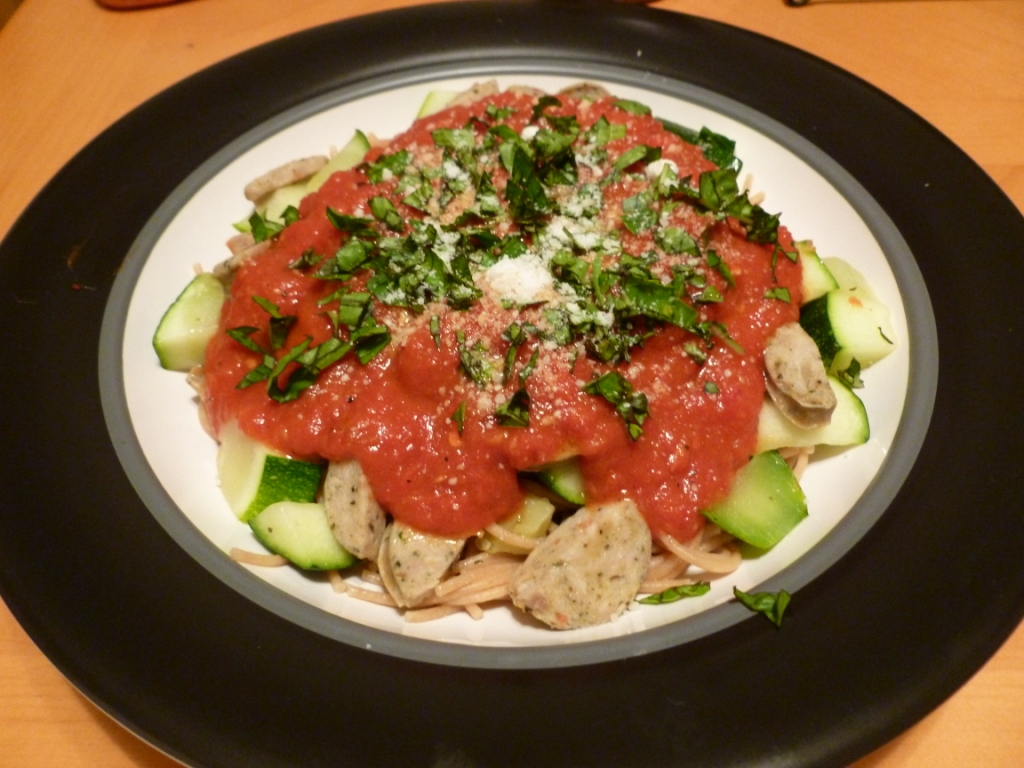
Spaghetti with red sauce is never going to earn any Michelin stars or make it into a fancy French cookbook. But it's delicious comfort food, and sometimes it's just what you feel like. We've long felt that food doesn't need to be fancy as long as it's made from quality ingredients. This is a perfect example. We know that the tomatoes, onions, garlic, carrots, zucchini and herbs are grown in a manner we agree with, because we grew them. And short of making our own sausage (eww) or making our own pasta (time consuming), this is about as close to an entirely homegrown meal as you can get. We may have taken some inspiration from a recipe we found online, but this really was a meal we grew ourselves. Not just from farm to fork, we took this from seed to sauce!
Thursday, September 20, 2012
Thursday, September 13, 2012
Our Long Overdue August Harvest Update
Wow, this is embarrassing! September is almost half over, and we still haven't updated our harvest totals for the month of August. We can only milk the excuse that we're exhausted from grape picking for so long, and a week and half later is probably long enough. But not to fear, we have still been keeping track, just on our kitchen whiteboard rather than the blog.
In case you can't read Greg'sfine penmanship chicken scratch, here are the numbers from August:
0.7 ounces of Anaheim peppers
1.6 ounces of red peppers
1.7 ounces of strawberries
2.2 ounces of "Nebraska Wedding" slicing tomatoes
5.0 ounces of Poblano peppers
1 pound, 3.4 ounces of carrots
2 pounds, 6.3 ounces of cherry tomatoes
6 pounds, 7.1 ounces of "Early and Often" slicing tomatoes
7 pounds, 3.3 ounces of Roma tomatoes
25 pounds, 4.9 ounces of zucchini
and 20 eggs!
This is kind of a good rebound on several fronts, especially the tomatoes. Last month we were complaining about the various maladies they had, and while those have continued to be an annoyance, we've been able to harvest lots of nice tomatoes. We still throw some into the compost bin for blossom end rot or splitting or bug attacks, but we've also been able to make our own salsa, spaghetti sauce, BLTs and salads without having to buy any tomatoes. The only bummer at this point is that we haven't quite had enough (especially all at one time) to can any tomato products - salsas and sauces - for this winter. But that just means we've been busy enjoying the fruits of our labor while they're in season.
In other news, we've acquired a handy new gardening tool! Or actually, it's more of a blogging tool. You may have noticed that while we love to add photos to our posts, the quality of the shots usually isn't the greatest. And as all amateur photographers know, the best way to get better pictures is to buy an expensive camera! Just kidding. But yeah, we did go buy a new, more expensive camera.
This one, a Panasonic Lumix FZ47. Now, real photo experts will immediately notice this isn't a true SLR, but it is still a huge step up from the pocket point-and-shoot we had before. It's called a bridge camera, which is a good "inbetweener" for novices like us. Greg took a photo class way back in high school, and wanted to try out a camera that offered full manual control, which these do. Now, obviously it's going to take a lot of education and experimentation to figure out how to use those settings to get good photos, but we'll see if we can't make this blog a bit prettier by doing so.
As a start, here's a picture from the first day of messing around with the new toy, a portrait of officialfarm cat lay-around-the-house-and-do-nothing cat Velma. She contributes absolutely nothing to the urban farm, but hey, she looks good doing it.
In case you can't read Greg's
0.7 ounces of Anaheim peppers
1.6 ounces of red peppers
1.7 ounces of strawberries
2.2 ounces of "Nebraska Wedding" slicing tomatoes
5.0 ounces of Poblano peppers
1 pound, 3.4 ounces of carrots
2 pounds, 6.3 ounces of cherry tomatoes
6 pounds, 7.1 ounces of "Early and Often" slicing tomatoes
7 pounds, 3.3 ounces of Roma tomatoes
25 pounds, 4.9 ounces of zucchini
and 20 eggs!
This is kind of a good rebound on several fronts, especially the tomatoes. Last month we were complaining about the various maladies they had, and while those have continued to be an annoyance, we've been able to harvest lots of nice tomatoes. We still throw some into the compost bin for blossom end rot or splitting or bug attacks, but we've also been able to make our own salsa, spaghetti sauce, BLTs and salads without having to buy any tomatoes. The only bummer at this point is that we haven't quite had enough (especially all at one time) to can any tomato products - salsas and sauces - for this winter. But that just means we've been busy enjoying the fruits of our labor while they're in season.
In other news, we've acquired a handy new gardening tool! Or actually, it's more of a blogging tool. You may have noticed that while we love to add photos to our posts, the quality of the shots usually isn't the greatest. And as all amateur photographers know, the best way to get better pictures is to buy an expensive camera! Just kidding. But yeah, we did go buy a new, more expensive camera.
This one, a Panasonic Lumix FZ47. Now, real photo experts will immediately notice this isn't a true SLR, but it is still a huge step up from the pocket point-and-shoot we had before. It's called a bridge camera, which is a good "inbetweener" for novices like us. Greg took a photo class way back in high school, and wanted to try out a camera that offered full manual control, which these do. Now, obviously it's going to take a lot of education and experimentation to figure out how to use those settings to get good photos, but we'll see if we can't make this blog a bit prettier by doing so.
As a start, here's a picture from the first day of messing around with the new toy, a portrait of official
Tuesday, September 4, 2012
The Wrath of Grapes
It's Labor Day weekend in America! A holiday that is usually filled with people taking part in their favorite summer traditions before fall really sets in. There are backyard barbecues, landscaping projects, and final dips in the swimming pool happening all around. But thanks to an abnormally warm summer, this pair of urban farmers spent the weekend taking part in a quintessential autumn experience. And that experience involved quite a bit more "labor" than either one of us could have imagined.
Stacia's mother has quite the farming streak of her own, and her latest endeavor is tending a one acre vineyard in the picturesque hills of northeast Iowa, not far from the town where Stacia grew up. She has been spending her summer caring for the vines and it was time for the harvest.
The vines were heavy with clusters of brilliant, purple fruit. After weeks of sampling the flavor and testing the sugar content of the grapes, she gathered up her family, friends, and neighbors to spend part of their weekend among the vines. Naturally, we couldn't let her down, so we grabbed our pruning shears and work gloves, and hit the road.
Neither one of us had much experience with grapes before, but the instructions seemed pretty simple. Grab a ripe cluster of grapes, snip it off of the vine, place it in a bucket, and repeat. We settled in to a spot with lots of ripe fruit and started picking.
It sure didn't take long to realize that this was going to be hard work! The vines are tall, so we spent a lot of time with our necks and arms stretched upward. The sugary fruit was swarming with bees who loved their sweet flavor as much as we did. Each row seemed to stretch on and on, and when a row was finished, there was always another one to begin. Even on an overcast day, we quickly worked up a sweat.
Harvesting grapes is a task that hasn't changed much over the years. The grapes will burst if they are handled too roughly, so mechanical picking equipment is no substitute for a pair of hard working hands. Our hands were busy over the course of the weekend, and by time we were all done, our crew had taken 5,000 pounds of grapes from the vines. A figure like that really puts our backyard harvests into perspective!
Spending time working in the vineyard got us hot, tired, sweaty and achy, but it also gave us a new appreciation for all the hard work that goes into crafting a bottle of wine. We'd worked ourselves to the absolute brink of exhaustion working a single acre, and we didn't even harvest everything we could have. If we'd had the energy to stick around, we could have picked lots more. But it was really all we could do to haul ourselves back to town for some rest as the grapes were hauled down the road to be turned into wine.
As we sit back at home to compose this post, we're enjoying a lovely glass of last season's red wine that is easy to sip, but took quite the effort to make. If we're fortunate enough to get some wine made from this year's crop, it will probably taste even better knowing that we contributed our part into that effort.
Stacia's mother has quite the farming streak of her own, and her latest endeavor is tending a one acre vineyard in the picturesque hills of northeast Iowa, not far from the town where Stacia grew up. She has been spending her summer caring for the vines and it was time for the harvest.
Neither one of us had much experience with grapes before, but the instructions seemed pretty simple. Grab a ripe cluster of grapes, snip it off of the vine, place it in a bucket, and repeat. We settled in to a spot with lots of ripe fruit and started picking.
It sure didn't take long to realize that this was going to be hard work! The vines are tall, so we spent a lot of time with our necks and arms stretched upward. The sugary fruit was swarming with bees who loved their sweet flavor as much as we did. Each row seemed to stretch on and on, and when a row was finished, there was always another one to begin. Even on an overcast day, we quickly worked up a sweat.
Harvesting grapes is a task that hasn't changed much over the years. The grapes will burst if they are handled too roughly, so mechanical picking equipment is no substitute for a pair of hard working hands. Our hands were busy over the course of the weekend, and by time we were all done, our crew had taken 5,000 pounds of grapes from the vines. A figure like that really puts our backyard harvests into perspective!
Spending time working in the vineyard got us hot, tired, sweaty and achy, but it also gave us a new appreciation for all the hard work that goes into crafting a bottle of wine. We'd worked ourselves to the absolute brink of exhaustion working a single acre, and we didn't even harvest everything we could have. If we'd had the energy to stick around, we could have picked lots more. But it was really all we could do to haul ourselves back to town for some rest as the grapes were hauled down the road to be turned into wine.
As we sit back at home to compose this post, we're enjoying a lovely glass of last season's red wine that is easy to sip, but took quite the effort to make. If we're fortunate enough to get some wine made from this year's crop, it will probably taste even better knowing that we contributed our part into that effort.
Tuesday, August 21, 2012
Egg-cellent News!
About 18 weeks ago, we told you all about the new baby chicks that we were raising on our urban farm. We gave each fuzzy little bird a name, fed them, and kept them warm. Then we talked about how fast they were growing up and we moved them out into the coop we built in the backyard. And now today we are very proud to share our latest milestone in chicken keeping.
We've been keeping a close eye on the chicken coop lately; checking the next boxes and glancing around the outdoor run. And today we finally found what we've been looking for - our first egg!
This little egg is a bit smaller than an average hen's egg. That is common for young chickens and it shouldn't be much longer until we're getting full sized eggs from each one of our birds. We didn't actually find this egg in the nest boxes either. Evidently one of chickens decided she'd rather lay her egg outdoors. When Greg spotted the egg, we were pretty sure that it hadn't been there long, but admittedly, we had been checking the next boxes more thoroughly than the rest of the coop. So we thought we'd better make sure that the egg was fresh.
An easy test to check the freshness of an egg is to simply place it in a glass filled with water. Our egg sank to the bottom of the glass and sat on its side. That means that it's very fresh and we can feel confident about eating it safely.
To help you see that our egg is a little on the small side, we placed it inside the carton of local eggs that we recently bought at the grocery store. Can you see which one is ours?
We aren't sure which one of our chickens actually laid the first egg. It wasn't one of our Easter Eggers, because they lay blue eggs. But our Plymouth Barred Rocks, Buff Orpingtons, and Rhode Island Reds will all lay brown eggs, so it could have been any one of them. Whichever it was, we do hope that she starts giving lessons to the rest of the flock!
Edited to add: After a couple of days observing the flock, we think the chicken that laid our first egg is the Rhode Island Red that you can see standing behind the water jug in the last photo.
This post has been shared with Simple Lives Thursday.
Edited to add: After a couple of days observing the flock, we think the chicken that laid our first egg is the Rhode Island Red that you can see standing behind the water jug in the last photo.
This post has been shared with Simple Lives Thursday.
Friday, August 17, 2012
When Life Gives You Cucumbers...
Way back when we were buying seeds, we bought (or already had on hand) seeds for cantaloupe, butternut squash and cucumbers. The plan was to find a place in the lawn to dig out the sod and put in a vine patch. But with all the other work that we were doing on our raised beds, we simply never found the time to set this space up. Eventually we mounded up three hills in the very back section of the lot and planted seeds for those three plants, thinking at least giving them a try was better than not having it perfect. It seemed like a good plan.
Which it was, in theory. The trouble was that reality didn't agree much. The back of the yard was the former owners' garden area, and for whatever reason, has really bad soil. Maybe it was very intensively planted and never rebuilt with compost or organic matter, but it's never been able to hold moisture very well. So we should have been watering the plants pretty regularly, but for the second issue. We bought over 200 ft of hose, but even that doesn't quite reach the hills. When we'd irrigate, we'd have to get as close as we could and shoot the water up in a big arc, just barely reaching the plants. Probably not the best way to water. Add in frequent rabbit attacks, and by time the big drought came along this summer, it was an easy decision to just let these plants go and prioritize our water elsewhere.
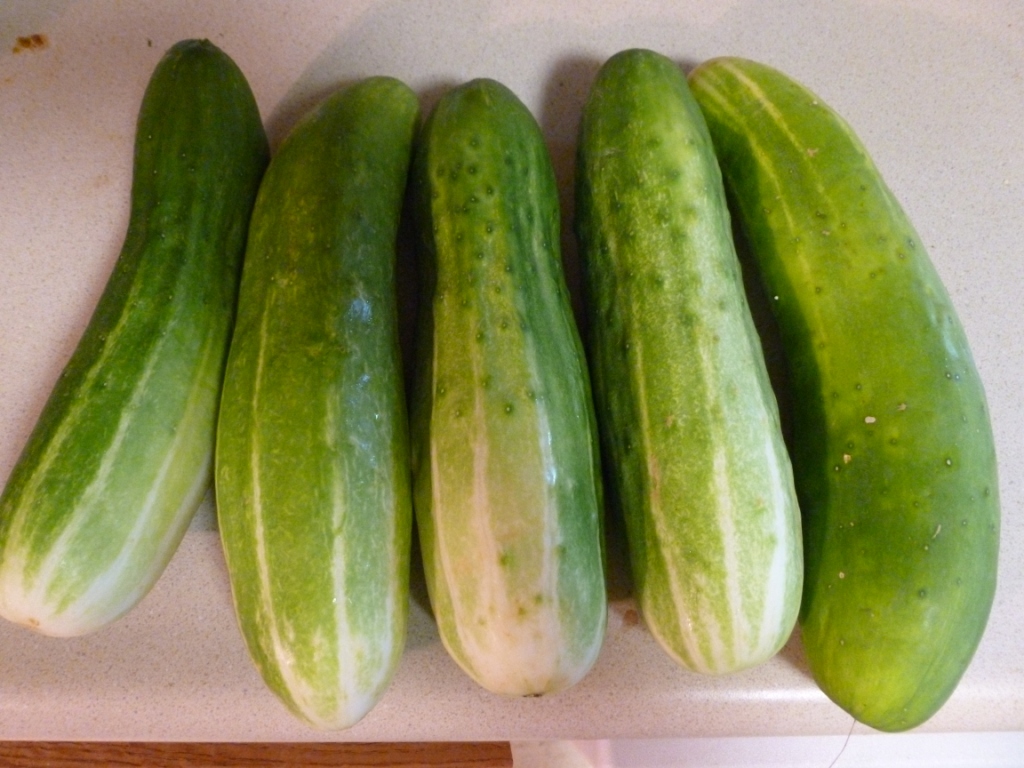
Which was fine, except it meant we didn't have any of these:
And that's where the generosity of our fellow Iowans comes into play. A coworker of Stacia's had way more cucumbers than he could eat, and knew that we were into eating local, healthy produce. So he offered up a batch from his garden. The next week, one of Greg's coworkers had extra cucumbers and brought those into the office to share. Before we knew it, we had a pile of cukes we needed to use!
Some went into cucumber salad, others onto Chicago-style hot dogs, but we were still left with plenty, mostly the bigger, seedier specimens that didn't look as good for fresh use. We knew we couldn't let these go to waste, so we dusted off our trusty canner and took a look at the incomparable Ball Blue Book for a recipe. We settled on Dill Relish, since it wouldn't use the big seeds these particular cucumbers had, and well, because we like hot dogs.
The first step was to get rid of those seedy centers. This was easy enough; just slice down the center and use a spoon to scoop out the centers. You'll notice we also peeled ours since they were pretty big and had tougher skins. With thinner skinned cucumbers, you probably could leave them on.
From there, we just followed the step-by-step instructions in the Blue Book. We've mentioned this before, but it's worth repeating that following the Blue Book is a really good way to go when home canning. Doing it wrong can make you very sick (or worse), so we tend to trust the experts. To make relish we started by finely chopping the cucumbers in a food processor. This was a bit tricky - we had to use very short pulses to make sure we were chopping and not pureeing them to mush. After this we sprinkled the chopped cukes with the prescribed amounts of salt and turmeric, then covered the mixture with water and let it stand for 2 hours.
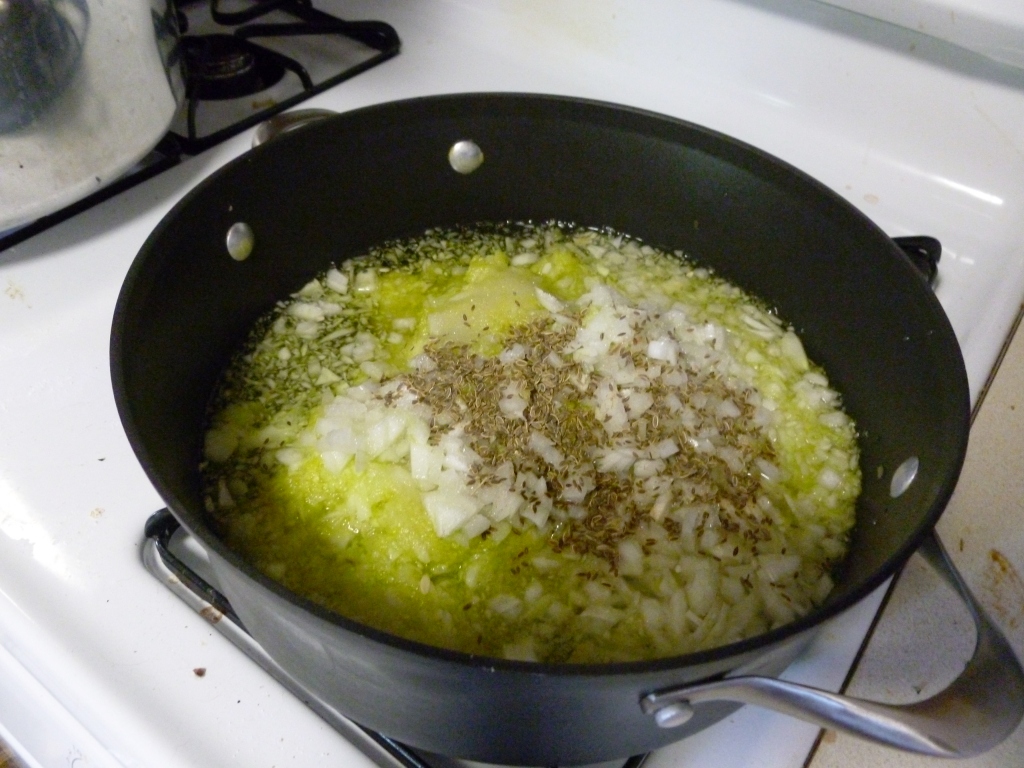
It didn't look bad, but it wasn't particularly appetizing at this point. Not much changed over the course of the few hours, at least not visually. But we faithfully let it sit this way for a few hours before we drained the liquid off the cucumber solids. This was a good start, but it needed some seasoning to become actual relish. The recipe from Ball called for chopped onions, sugar, white wine vinegar and dill seed. Note that dill seed is not the same as dill weed, and they apparently have a very different flavor. We originally thought we could use the dill weed in our cupboard but had to run out to get a bottle of dill seed at the last minute. We cooked this all together for 10 minutes.
After 10 minutes, it was starting to look more like relish. Still mostly cucumbers but with enough spice, vinegar and chunks of onion that we felt pretty confident it would be tasty. Because of that vinegar the relish was acidic enough that it could be processed in a boiling water canner, not a pressure canner. We had started with about 5 pounds of cucumbers and ended up with 4 nearly full pint jars. Each one sealed with a nice audible POP! but we left them on the counter with the rings on until the next morning. Then we gently pressed on the jar lid to make sure it was sealed and we threaded the rings off. When they were done, they looked like this:
We haven't had any hot dogs since we made these jars of relish, so we actually have no idea how good or not good it might taste. Thus far everything we've made from the Ball Blue Book has been delicious so there's no reason to think that this will be any different. Either way, it was a great way to use someone's excess cucumbers. We did what we could to enjoy the fresh veggies when they were in season, but that time can be pretty fleeting. Canning is a great way to preserve the harvest for later, even if it's not our harvest.
Tuesday, August 7, 2012
July Harvest Update
If it feels like it's been a really long time since we've posted, trust us, we feel the same. We've both been on the road a lot lately for our (non-farming) day jobs; Greg was in Atlanta last week, with Stacia in Dallas right now. That makes it hard to keep up with even maintaining and caring for our garden, much less finding time to blog about it. So here's a brief (and overdue) update on our fruitful July harvest, after which we should be back to our regular posting schedule.
As we mentioned last time, it seems that we have all the zucchini plant pests you possibly can. But those plants are real troopers, and just keep churning out zucchini after zucchini. We've been pretty diligent in harvesting them before they reach baseball bat-size, but it's still a heck of a lot of zucchini. This shows just the amount we happened to have on hand this evening, not counting the many we've already eaten or the three that are almost ready to pick. Considering the duress they're under, these are some pretty incredible plants!
Not surprsingly, zucchini lead the way in the harvest totals. Overall, in July we harvested:
0.4 ounces of snow peas
0.7 ounces of Poblano peppers
1.1 ounces of Roma tomatoes
9.8 ounces of Anaheim peppers
12.2 ounces of strawberries
12.3 ounces of kale
12.7 ounces of cherry tomatoes (52 tomatoes)
13.9 ounces of green beans
1 pound 13.1 ounces of garlic
And... 11 pounds 12.5 ounces of zucchini (8 zukes)!
Unfortunately, while the zucchini haven't seemed to show any sign of slowing under the attack of the various bugs, the same can't be said for our tomatoes. We've had a lot of the fruits split, most likely due to uneven watering with the intense drought we've been having this year. Well, the cucumber beetles have been using those soft spots as entry points into the tomatoes and just wreaking havoc. They don't all look this bad, but we do have our share of tomatoes that end up looking tunneled through and chewed up like this.
We should probably keep a better eye on watering so they don't split so bad to begin with, but for now it's been necessary to cut out the good bits to keep around the damage. They taste great, but it would be nice if they didn't look so terrible.
And of course, we still have chickens, and have probably been criminally negligent in not posting photos of them. The ladies still haven't laid any eggs, but according to what we read online and in books, we're very very close to that happening. Most likely within another couple of weeks we should have our first egg. Other than that, they're doing well - they may not enjoy the heat we've had but they've been dealing with it very well. And how's this for a fun chicken discovery: they seem to love the taste of Japanese beetles! Thankfully we don't have very many of those around the garden but when we find one, we pluck it off and give our hens a snack. With tastes like that, who wouldn't want backyard chickens?
As we mentioned last time, it seems that we have all the zucchini plant pests you possibly can. But those plants are real troopers, and just keep churning out zucchini after zucchini. We've been pretty diligent in harvesting them before they reach baseball bat-size, but it's still a heck of a lot of zucchini. This shows just the amount we happened to have on hand this evening, not counting the many we've already eaten or the three that are almost ready to pick. Considering the duress they're under, these are some pretty incredible plants!
Not surprsingly, zucchini lead the way in the harvest totals. Overall, in July we harvested:
0.4 ounces of snow peas
0.7 ounces of Poblano peppers
1.1 ounces of Roma tomatoes
9.8 ounces of Anaheim peppers
12.2 ounces of strawberries
12.3 ounces of kale
12.7 ounces of cherry tomatoes (52 tomatoes)
13.9 ounces of green beans
1 pound 13.1 ounces of garlic
And... 11 pounds 12.5 ounces of zucchini (8 zukes)!
Unfortunately, while the zucchini haven't seemed to show any sign of slowing under the attack of the various bugs, the same can't be said for our tomatoes. We've had a lot of the fruits split, most likely due to uneven watering with the intense drought we've been having this year. Well, the cucumber beetles have been using those soft spots as entry points into the tomatoes and just wreaking havoc. They don't all look this bad, but we do have our share of tomatoes that end up looking tunneled through and chewed up like this.
We should probably keep a better eye on watering so they don't split so bad to begin with, but for now it's been necessary to cut out the good bits to keep around the damage. They taste great, but it would be nice if they didn't look so terrible.
And of course, we still have chickens, and have probably been criminally negligent in not posting photos of them. The ladies still haven't laid any eggs, but according to what we read online and in books, we're very very close to that happening. Most likely within another couple of weeks we should have our first egg. Other than that, they're doing well - they may not enjoy the heat we've had but they've been dealing with it very well. And how's this for a fun chicken discovery: they seem to love the taste of Japanese beetles! Thankfully we don't have very many of those around the garden but when we find one, we pluck it off and give our hens a snack. With tastes like that, who wouldn't want backyard chickens?
Sunday, July 29, 2012
The Zucchini Axis of Evil
When you grow food in a home garden, a big part of what you're doing is trying to create and manage order from the chaos of the natural world. We arrange raised beds in tidy rows, carefully select vegetable breeds that have the characteristics we desire, and water regularly when Mother Nature doesn't provide enough rain (especially this year!). But some unpleasant discoveries this week reminded us that in the end, we're not really in charge.
First, we've got these reddish colored perfect spheres on the underside of the zucchini leaves. These we are able to identify as squash bug eggs. You know how we can tell that's what they are? Because some of them had already started to hatch by time we found them, and they looked like this:
As adults, squash bugs are kind of shield-shaped insects with pointed snouts and an unfortunate appetite for squash leaves. An otherwise healthy zucchini plant can usually withstand an attack from these bugs, but you'll still want to get rid of them if you spot them. We don't like to use chemical pesticides, so we've been simply removing and squishing any eggs we find.
This is the next culprit we've seen around our zucchini, which are probably a bigger problem. These are cucumber beetles, but they're apparently open to eating zucchini and other squashes as well. Their larvae tunnel through the roots and stems, then the adults munch on leaves and flowers. That's not good, but the real trouble is that they spread bacterial wilt, a disease that can kill entire plants. Thankfully we haven't yet seen any signs of this disease but with so many beetles around, it's a concern.
The last scourge of the squash family is the squash vine borer, possibly the most terminal, and one that we worry we might have. As their name implies, these insects also tunnel through the stems of the plants, disrupting the flow of nutrients. Once these are inside the stems, there's no real way to see them, but you'll see the damage they cause. Stems will start to get wilty, and eventually the base of the plant will turn orange and porous in a material called frass.
This is almost certainly vine borer frass, which we can confirm by splitting and looking inside the stems. If the plants die, we'll try to do that. But if the borers are already in there, we're pretty much out of luck. We should have been on the lookout for adult borers (which are moths) in the early summer, and could have used traps to try to preemptively kill them off.
For now, though, it's a race against time, to harvest all the zucchini the plants can produce while they can. We also plan to pull and destroy any plants that do die off from apparent borer attacks. This might slow or stop their spread.
On the plus side, we have already harvested more than 10 pounds of zucchini, and are finding many delicious ways to use it. We've sliced and grilled it, we've made a chocolate-zucchini cake, and just today we baked a loaf of zucchini bread. We might not be able to completely control the insects that are attacking our plants, but we can take charge of enjoying its bounty while it lasts.
First, we've got these reddish colored perfect spheres on the underside of the zucchini leaves. These we are able to identify as squash bug eggs. You know how we can tell that's what they are? Because some of them had already started to hatch by time we found them, and they looked like this:
As adults, squash bugs are kind of shield-shaped insects with pointed snouts and an unfortunate appetite for squash leaves. An otherwise healthy zucchini plant can usually withstand an attack from these bugs, but you'll still want to get rid of them if you spot them. We don't like to use chemical pesticides, so we've been simply removing and squishing any eggs we find.
This is the next culprit we've seen around our zucchini, which are probably a bigger problem. These are cucumber beetles, but they're apparently open to eating zucchini and other squashes as well. Their larvae tunnel through the roots and stems, then the adults munch on leaves and flowers. That's not good, but the real trouble is that they spread bacterial wilt, a disease that can kill entire plants. Thankfully we haven't yet seen any signs of this disease but with so many beetles around, it's a concern.
The last scourge of the squash family is the squash vine borer, possibly the most terminal, and one that we worry we might have. As their name implies, these insects also tunnel through the stems of the plants, disrupting the flow of nutrients. Once these are inside the stems, there's no real way to see them, but you'll see the damage they cause. Stems will start to get wilty, and eventually the base of the plant will turn orange and porous in a material called frass.
This is almost certainly vine borer frass, which we can confirm by splitting and looking inside the stems. If the plants die, we'll try to do that. But if the borers are already in there, we're pretty much out of luck. We should have been on the lookout for adult borers (which are moths) in the early summer, and could have used traps to try to preemptively kill them off.
For now, though, it's a race against time, to harvest all the zucchini the plants can produce while they can. We also plan to pull and destroy any plants that do die off from apparent borer attacks. This might slow or stop their spread.
On the plus side, we have already harvested more than 10 pounds of zucchini, and are finding many delicious ways to use it. We've sliced and grilled it, we've made a chocolate-zucchini cake, and just today we baked a loaf of zucchini bread. We might not be able to completely control the insects that are attacking our plants, but we can take charge of enjoying its bounty while it lasts.
Subscribe to:
Posts (Atom)